

Is Laminate Flooring Waterproof? What Homeowners Should Know
Is Laminate Flooring Waterproof? What Homeowners Should Know
Homeowners searching for whether laminate flooring is waterproof usually want clarity on moisture exposure, swelling risks, and room suitability. This article explains how laminate is constructed, how it reacts to water, and how long surface protection lasts. It also outlines the difference between spill resistance and long-term water contact. By the end, homeowners will understand realistic performance expectations before evaluating
laminate flooring in Carlsbad, CA, or any similar area.
What does “waterproof” mean when homeowners evaluate flooring?
Waterproof materials prevent liquid from penetrating through the surface or into internal layers. This definition requires continuous resistance and no structural change over time. Water-resistant materials slow moisture absorption for a limited period but still allow eventual penetration.
When evaluating laminate, the term waterproof can only apply if the core and joint system prevents swelling. Most laminate products offer controlled resistance, not permanent waterproofing. Homeowners should distinguish temporary protection from unlimited exposure.
How is laminate flooring constructed, and why does that matter for moisture?
Laminate planks contain a fiberboard core made from compressed wood particles. This core determines dimensional stability. When moisture reaches it, fibers expand and swell. The surface wear layer protects against scratches and spills but cannot block water indefinitely.
Joints represent the most vulnerable location. If liquids seep into plank edges, the core absorbs water faster than it does through the surface film. Construction explains why laminate is classified as moisture-sensitive despite durable coatings.
Can standard laminate flooring tolerate wet conditions?
Standard laminate flooring is not waterproof. It can handle short-term spills if wiped promptly, but standing water leads to swelling and warping. Kitchens and entryways often experience splash exposure, and laminate performs acceptably when liquids are removed quickly.
Bathrooms, laundry rooms, and other high-moisture areas pose a greater risk. Persistent humidity softens fiberboard, reducing structural integrity. When core layers expand, planks may separate or lift at the edges.
What happens when laminate flooring absorbs moisture?
Moisture causes the core to increase in volume, distorting the plank geometry. Swelling along joints produces raised edges, which affect stability and appearance. If swelling becomes severe, planks cannot return to their original dimensions after drying.
Long-term water exposure can cause delamination, where surface layers detach from the core. Once structural bonding fails, replacement - not repair - is usually required. These outcomes explain why laminate cannot be exposed to recurring moisture cycles.
Is waterproof laminate different from standard laminate flooring?
Some manufacturers produce laminate with enhanced moisture barriers. These products modify the core to slow absorption and use joint seals to reduce penetration paths. While performance improves, these planks still contain wood fibers and are not impermeable.
Improved moisture performance does not eliminate installation limitations. Waterproof-labeled laminate still requires immediate spill removal and cannot remain in standing water. The primary difference is delay, not the elimination, of moisture effects.
Is laminate flooring suitable for kitchens and dining areas?
Kitchens and dining rooms create intermittent splash exposure but rarely sustain prolonged standing water. Laminate is commonly installed in these rooms when homeowners maintain prompt cleanup habits. Chairs and foot traffic increase abrasion risk, but not moisture risk.
Dishwasher failures, plumbing leaks, or repeated spill saturation can still trigger swelling. When flooring is installed near water sources, trim seals around boundaries help slow edge absorption, but cannot prevent it indefinitely.
Is laminate recommended for bathrooms, laundry rooms, or basements?
Bathrooms expose flooring to direct water on the surface and persistent humidity. Water can migrate into the plank edges from wet bath mats or shower runoff. Laundry rooms carry risk from appliance leaks and overflow. These conditions frequently exceed spill-resistant performance.
Basements introduce moisture vapor from concrete substrates, especially in humid regions. Unless vapor is controlled, laminate flooring may cup and swell over time. Concrete moisture testing and vapor barriers are generally required if homeowners proceed with installation.
How does climate affect laminate performance in coastal California regions?
Coastal zones such as Carlsbad and Encinitas track seasonal humidity changes. Laminate tolerates moderate humidity but reacts to sustained moisture. Condensation on windows, high dew-point days, and limited ventilation affect vapor-based expansion.
Climate-driven movement may cause slight gapping if internal moisture fluctuates. Indoor environmental control limits this movement. While climate alone does not damage laminate, moisture accumulation over time increases the risk.
How long can standing water remain on laminate before damage occurs?
Laminate has no fixed tolerance period because performance depends on volume, temperature, and surface access. A small spill wiped within minutes generally causes no change. Puddles left for hours increase swelling probability.
Flooding events rapidly overwhelm surface layers and penetrate joints. Even products advertised as waterproof often specify exposure windows rather than indefinite resistance. Practical performance aligns with quick spill removal.
How do homeowners recognize early moisture-related damage in laminate flooring?
Visual changes appear along plank edges first. Raised joints or bowed surfaces indicate water absorption. Softened areas may compress under foot pressure. Discoloration can occur if moisture alters fiber density.
If noise develops underfoot or planks shift from their original alignment, swelling may be lifting the locking mechanism. These changes progress; once dimensional changes appear, reversal is unlikely.
Can laminate flooring be repaired after moisture exposure?
Minor edge lifting may flatten slightly after drying, but structural recovery is uncommon. Because laminate contains compressed wood fibers, swelling often becomes permanent. Sanding is not an option because wear-layer thickness cannot support abrasive removal.
Most repairs involve plank replacement. If widespread swelling occurs, full-room replacement is typical. Repair feasibility depends on the extent, not the surface appearance.
How do spill-cleaning practices affect laminate durability?
Laminate benefits from dry maintenance and limited moisture exposure. Damp mopping is acceptable if wrung thoroughly. Wet mops, steam appliances, and abrasive pads increase risk. Steam introduces heat and vapor pressure that can breach surface coatings and stress the core.
Cleaning chemicals must not saturate joints. Neutral pH products maintain surface clarity without residue, which helps preserve protective layers. Cleaning processes reinforce overall moisture prevention.
Does underlayment influence moisture risk under laminate flooring?
Most installations use underlayments to improve comfort and sound control. Some underlayments incorporate vapor barriers to slow moisture migration. Vapor barriers reduce, but do not eliminate, core exposure to concrete moisture.
If subfloor moisture exceeds safe thresholds, barriers cannot prevent accumulation. Testing concrete moisture before installation limits long-term failure risk.
Can laminate flooring be used with radiant heating systems?
Laminate flooring can function with radiant heat if temperature controls remain within product specifications. Excess heat accelerates moisture transfer and may dry planks unevenly. Dimensional change is possible but not guaranteed.
Radiant heat does not make laminate waterproof. It only influences expansion-contraction cycles. Heating should be increased gradually to limit thermal stress.
How does laminate compare with vinyl flooring for water exposure?
Vinyl flooring contains no wood fibers and does not absorb water. This structural difference supports installation in bathrooms, basements, and wet areas. Laminate requires dry-environment placement because of fiberboard sensitivity.
Both materials provide cost-efficient alternatives to hardwood, but vinyl offers continuous moisture tolerance while laminate offers limited spill resistance. Comparison highlights structural constraints, not performance claims.
Are there installation practices that reduce moisture problems?
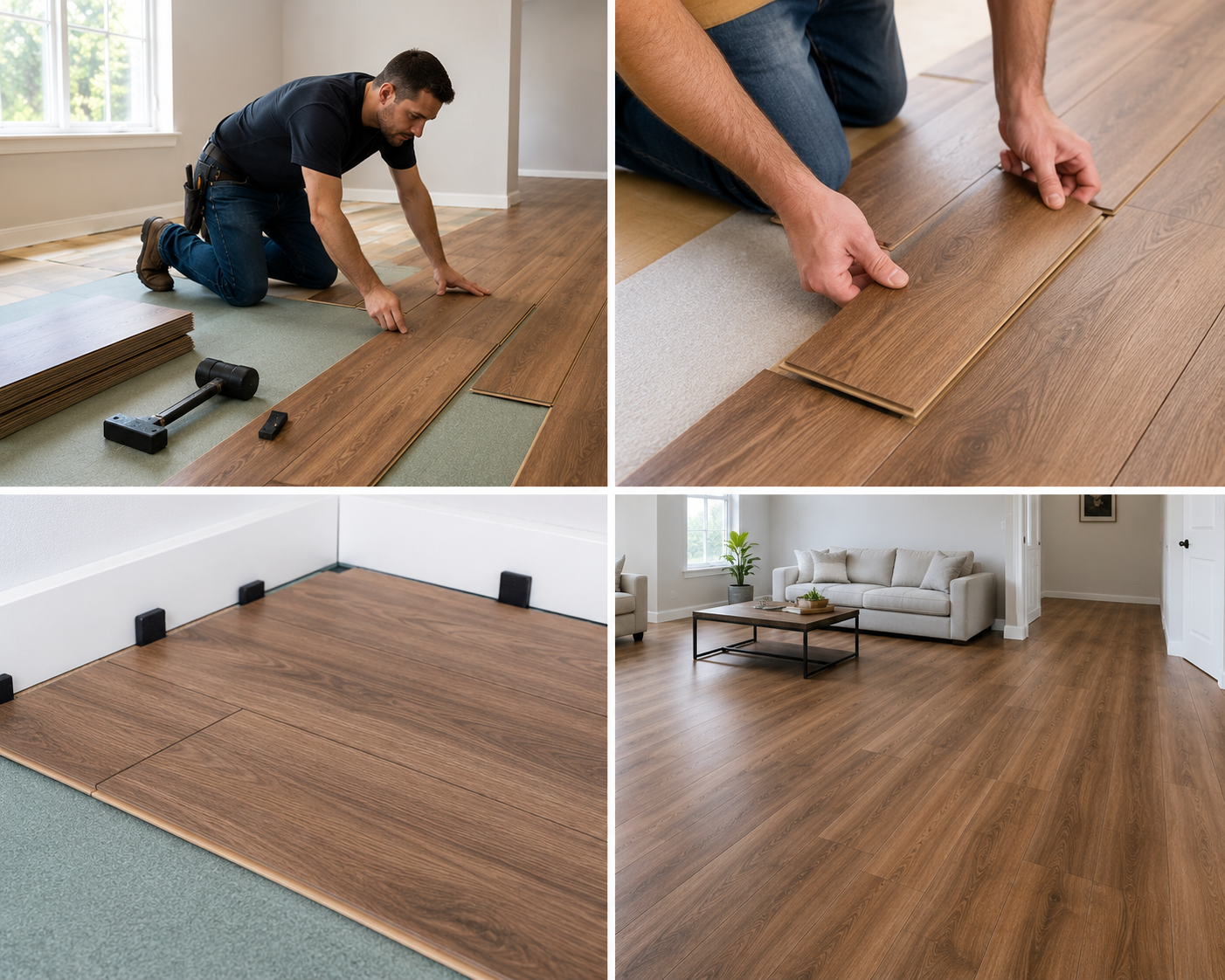
Perimeter sealing around transitions, thresholds, and walls slows moisture intrusion at exposed edges. Expansion gaps allow controlled movement when humidity shifts. Underlayment selection helps manage vapor-based transfer.
These practices do not eliminate risk but reduce the speed of moisture impact. Preventive installation methods support longer service life in moderately exposed spaces.
How durable is laminate flooring when moisture is not present?
Laminate performs well against abrasion and surface wear in dry environments. The wear layer resists scratches from foot traffic and furniture movement. Dimensional stability remains consistent when humidity remains low to moderate.
Durability expectations depend on maintaining a dry surface. When moisture remains controlled, laminate provides predictable performance.
How can homeowners evaluate whether laminate meets their room requirements?
Homeowners should identify potential exposure sources, including plumbing, household activity, and environmental humidity. Any room with recurring dampness falls outside the laminate’s intended use. Kitchens and living areas generally remain suitable.
Moisture behavior determines suitability more than visual preference. When risk factors exceed laminate tolerance, alternative materials provide greater reliability.
Frequently Asked Questions
Is laminate flooring waterproof?
No. Laminate resists short-term spills but absorbs moisture through plank edges and core layers.
Can laminate go in bathrooms?
Not reliably. High moisture and standing water commonly cause swelling and joint failure.
Does waterproof-labeled laminate stop swelling?
No. Modified cores slow absorption but do not prevent eventual dimensional change.
Key Takeaway
- Laminate flooring tolerates short-term moisture but is not waterproof.
- Swelling occurs once water reaches the core, especially through joints.
- Room selection must match moisture exposure, not visual preference.
A Final Thought
Laminate flooring performs predictably in dry locations and under controlled cleaning practices. Moisture management determines long-term results more than surface wear. Understanding these limits helps homeowners evaluate suitability before reviewing laminate flooring in Encinitas, CA, or similar markets.