

Luxury Vinyl Flooring (LVP & LVT) Benefits and Uses Explained
Luxury Vinyl Flooring (LVP & LVT) Benefits and Uses Explained
Most homeowners researching luxury vinyl want straight facts before comparing anything. Luxury vinyl flooring is a synthetic plank or tile product built to handle moisture, foot traffic, and basic indoor wear without the maintenance requirements of natural materials. This guide explains how the material is made, how LVP and LVT differ, where vinyl works well, and what performance limits matter. The focus is on construction, stability, indoor conditions, and long-term expectations, with a factual breakdown rather than product hype or brand positioning.
What is luxury vinyl flooring, and how is it built?
Luxury vinyl flooring is a manufactured multilayer surface designed for residential interiors. It uses a PVC-based core for stability, a printed film that creates wood or stone visuals, and a clear wear layer that takes the abrasion instead of the printed image. Many planks also include an attached pad to improve sound absorption.
When people look up Luxury vinyl flooring in Escondido, CA, they usually want something that handles slab foundations, random spills, and active foot movement without swelling. Vinyl works in those scenarios because the core does not absorb water the way wood-based flooring does.
Luxury vinyl comes in plank or tile formats, but the internal structure remains the same across categories. The overall performance depends on wear-layer thickness, installation method, indoor temperature control, and surface maintenance.
How do LVP and LVT differ?
LVP means “luxury vinyl plank,” and it is shaped like wood boards. LVT means “luxury vinyl tile,” which is cut into square or rectangular pieces to imitate ceramic or stone. The core, the wear layer, and the printed imaging technology are identical in both formats.
The choice comes down to layout style. Planks support continuous room runs that resemble hardwood installations. Tiles support grid layouts that often work in bathrooms, laundry spaces, or kitchens. The durability is the same, so there is no performance benefit tied purely to format.
What everyday problems does luxury vinyl solve inside a home?
Homeowners usually want flooring that can deal with moisture, shoes, pets, and cleaning products without constant monitoring. Luxury vinyl handles standing water better than laminate or engineered hardwood, so spills don’t trigger swelling. The surface does not need refinishing because it is not a porous material.
Luxury vinyl also absorbs minor impacts. Dropping a lightweight household object usually marks the wear layer temporarily rather than denting the core. The flooring supports rooms that need predictable behavior: kitchens, basements, living rooms, and guest spaces.
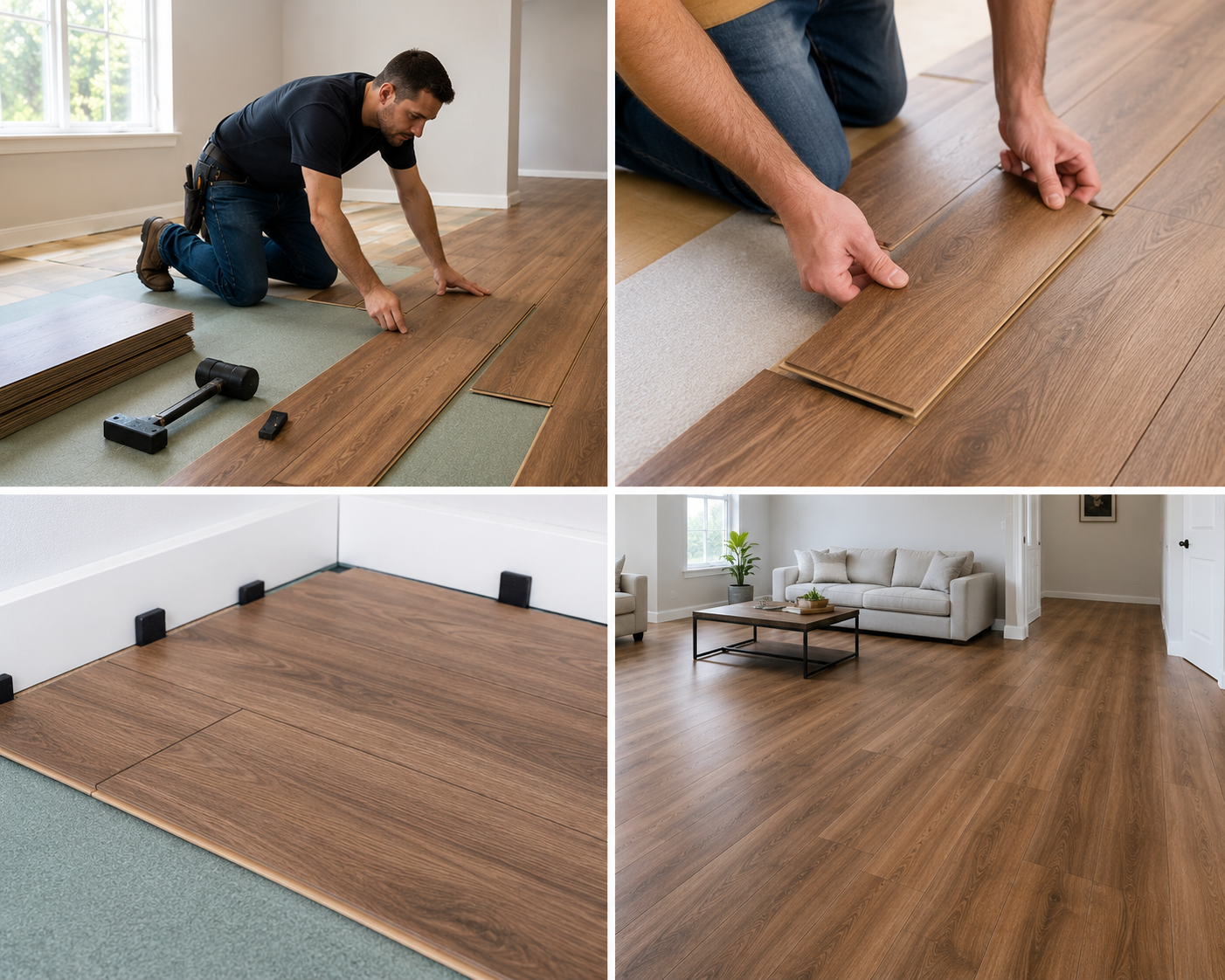
Another problem vinyl solves is installation downtime. Floating planks lock together, so installers do not need nails, sanding, or special finishing systems. As long as the subfloor is flat, the floor can be placed and used quickly.
Is luxury vinyl actually durable under daily use?
Durability depends on surface wear-layer thickness and the level of traffic. A thicker wear layer holds the printed film longer and slows down scratching or dulling. Chairs, sand, and pet nails create micro-abrasion over time. The layer does not refinish, so deterioration eventually means replacement.
Luxury vinyl handles cleaning chemicals better than wood, but still needs non-abrasive cleaners. Steam shouldn’t be used on floating systems because vapor can enter seams. Direct sunlight can fade digital imaging over time, so blinds or UV film can manage that risk.
Indoor footwear also matters. Hard-soled shoes accelerate dulling. Soft shoes slow it down. These are predictable material outcomes rather than random quality failures.
Where can luxury vinyl be installed, and what conditions matter most?
Luxury vinyl works in living rooms, bedrooms, kitchens, laundry rooms, entryways, and finished basements. Bathrooms are acceptable when seams are set correctly, and water is not allowed to sit beneath transitions.
Installation depends on three environmental controls:
- Flatness: Subfloors must not create vertical movement.
- Moisture: Slab moisture vapor needs testing before glue-down.
- Temperature: Floating floors need expansion gaps.
Vinyl should not be installed outdoors, in saunas, or in extreme-temperature storage areas. The core softens under heat and becomes brittle in cold conditions.
How does installation style affect stability?
Floating installations lock together through tongue-and-groove cuts. They rely on weight and friction. These floors require a flat subfloor because gaps or peaks transfer through the locking mechanism and create movement.
Glue-down installs bond the product directly to the slab or subfloor. This reduces shifting under rolling loads and works in areas where appliances, gym equipment, or heavy furniture remain in place.
Peel-and-stick tiles exist but are generally used for low-commitment surfaces, temporary rooms, or budget remodels. The adhesive weakens faster under heat and impact.
How long does luxury vinyl last inside a house?
Longevity depends on abrasion, UV exposure, furniture drag, and cleaning habits. In controlled indoor settings, luxury vinyl maintains its appearance for multiple years before wear becomes visible. Heavy-use kitchens show dulling sooner because friction concentrates in one zone.
Because vinyl cannot be sanded or refinished, its lifespan is limited by the wear layer. Once the surface dulls or scratches through to the print film, the only corrective option is replacement. That separates vinyl from hardwood, which can resurface multiple times.
Indentation is another time-based wear issue. Heavy furniture feet compress vinyl. Pads or coasters reduce denting, but the material does not rebound fully after extended compression.
What environmental or indoor-air considerations matter?
Luxury vinyl is a plastic-based material, so indoor air standards matter. Most modern products meet emissions certifications, but ventilation during installation is standard. Adhesives affect air quality more than the vinyl planks themselves, especially in glue-down projects.
Temperature stability also links to environmental management. Vinyl can move when exposed to high heat, so HVAC control prevents plank gapping. If extreme sunlight enters one doorway repeatedly, surface fading accelerates, and seams may distort.
If homeowners want flooring that lasts for multiple decades without controlled temperatures, stone or tile performs better.
Where does vinyl perform well in coastal or high-humidity areas?
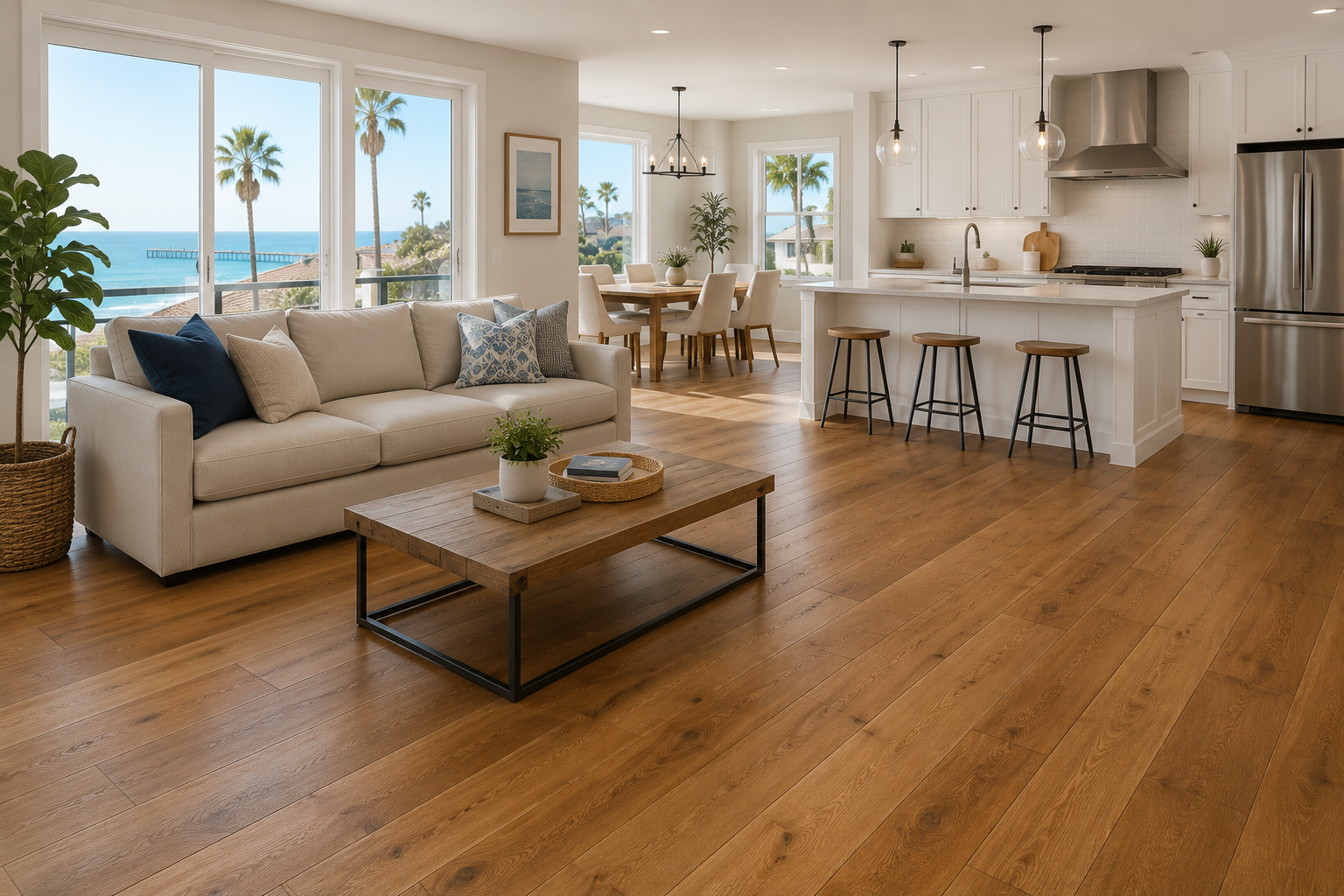
Vinyl tolerates humidity because the core does not absorb moisture. In coastal regions, humidity shifts are normal, and vinyl does not cup or warp the way wood does. Kitchens, bathrooms, and entries benefit because wet footprints are routine.
That said, humidity doesn’t eliminate surface wear. Salt and sand scratch the wear layer quickly if grit is left uncleaned. Mats and sweeping reduce abrasion. Vinyl also needs correct transitions near doors so water does not settle beneath the first plank row.
When homeowners search for Luxury vinyl flooring in Oceanside, CA, they are usually preparing for humidity, slab foundations, and wet-foot traffic. Vinyl works in those scenarios, but abrasion control still matters.
Frequently Asked Questions
Is luxury vinyl waterproof?
Luxury vinyl resists standing water on the surface, but edges and subfloors still need moisture control to prevent hidden intrusion.
Can luxury vinyl be placed over existing tile?
Yes, if the tile is secure, level, and clean. Deep grout lines may need filling.
Does luxury vinyl raise home value?
It improves function and aesthetics, but natural hardwood typically carries longer-term asset value.
Key Takeaway
- Vinyl handles moisture and indoor traffic without wood-based swelling
- The wear layer determines how long visuals stay sharp
- Once surface abrasion reaches the print layer, replacement is the only correction
A Final Thought
Luxury vinyl is a predictable synthetic flooring material made for active indoor spaces. It trades natural aging for controlled performance and straightforward installation. Homeowners who evaluate subfloor flatness, wear-layer thickness, and indoor conditions usually get the most reliable results.