

Resale Value Impact of Hardwood vs Laminate Flooring in Vista, CA
This article explains how hardwood flooring in Vista, CA, and laminate alternatives influence home resale value. It outlines how buyers evaluate flooring, how local market conditions affect preferences, and how durability, maintenance, and cost tradeoffs shape resale outcomes. The goal is to help homeowners understand realistic value impacts before choosing a flooring material.
Buyer Perception of Flooring in the Vista Housing Market
Buyers in Vista generally view flooring as both a visual indicator of quality and a signal of long-term maintenance costs.
- Hardwood is often associated with permanence and traditional construction standards.
- Laminate is commonly seen as a practical, budget-conscious option when well-maintained.
- Buyers in mid-range homes typically expect consistent flooring throughout the main living areas.
- Visible wear, mismatched materials, or outdated styles reduce perceived home conditions.
- Flooring choices rarely raise appraised value directly, but can influence buyer willingness to offer the full asking price.
In Vista’s $700,000–$1,000,000 home range, flooring does not usually drive pricing alone, but it can affect time on market and negotiation leverage.
Material Durability and Long-Term Wear Patterns
Durability affects how flooring looks at resale and how much replacement cost buyers anticipate.
- Solid hardwood can be refinished multiple times if properly installed.
- Engineered hardwood has limited refinishing potential depending on wear layer thickness.
- Laminate resists surface scratches but cannot be refinished once damaged.
- Coastal dust, sand, and indoor-outdoor traffic increase abrasion on all surfaces.
- Moisture exposure near kitchens and entries accelerates laminate edge swelling if seams are compromised.
Homes with flooring showing uniform wear typically perform better at resale than homes with patched or uneven aging, regardless of material.
Maintenance Expectations and Buyer Cost Calculations
Buyers mentally factor maintenance burden into perceived home value.
- Hardwood requires periodic refinishing and careful moisture control.
- Laminate needs replacement rather than restoration when worn.
- Buyers with pets or children often favor lower-maintenance materials.
- Visible maintenance neglect is often interpreted as deferred home care.
- Flooring replacement costs are commonly deducted during negotiations.
In Vista, where buyers often prioritize move-in readiness, flooring that appears clean and consistent can reduce perceived future expenses.
Cost-to-Value Relationship Between Flooring Types
Resale value impact depends on how closely the installation cost aligns with buyer expectations for the home’s price tier.
- Hardwood installation costs are higher due to materials, labor, and subfloor preparation.
- Laminate offers a lower upfront cost and faster installation timelines.
- Over-improving flooring relative to neighborhood standards rarely increases resale return.
- Homes priced above local norms face greater scrutiny for finish quality.
- Replacement cost is often weighed more heavily than original installation cost.
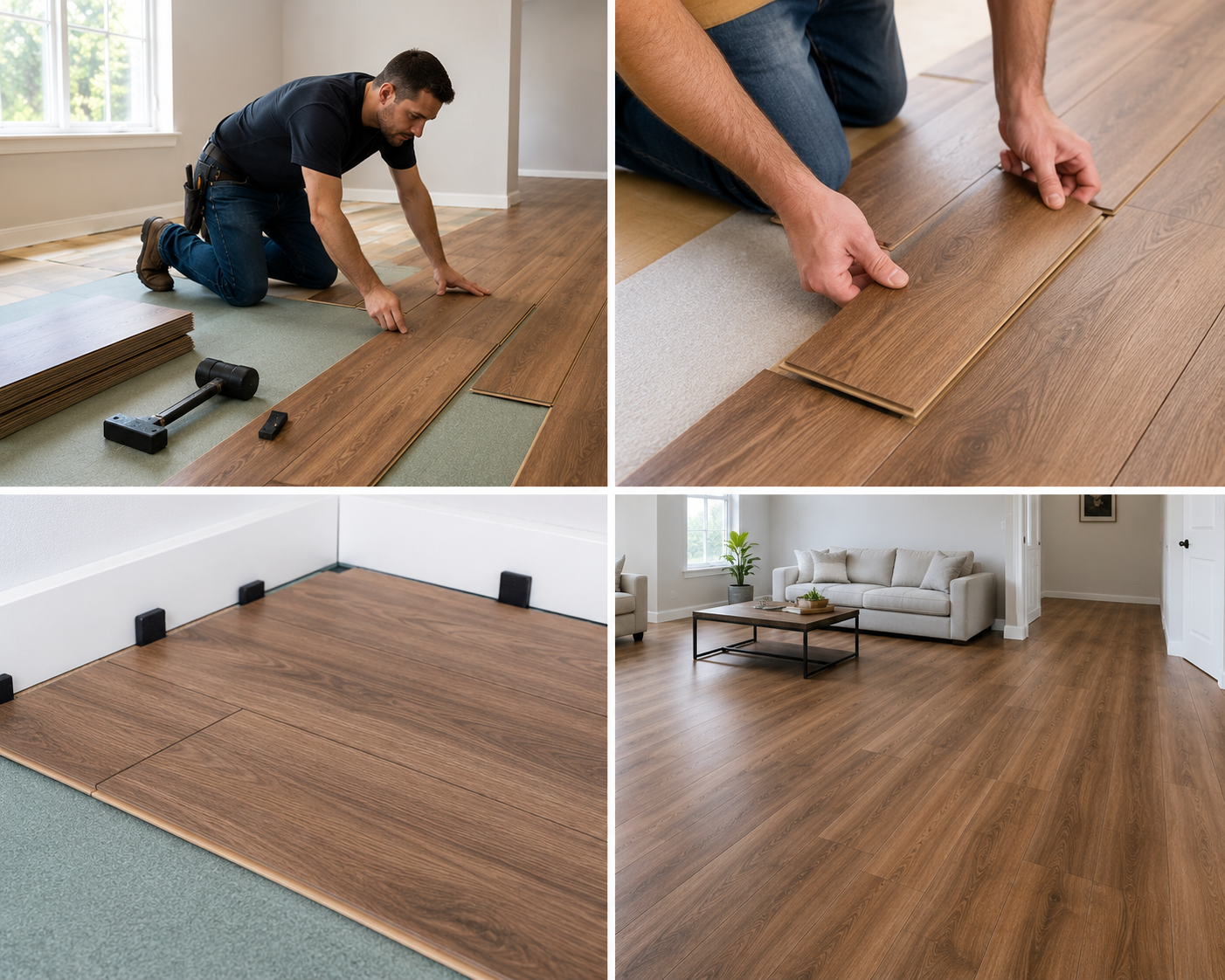
Laminate flooring in Vista, CA can perform well in resale when chosen in realistic styles that match the home’s overall condition and pricing.
Style, Consistency, and Layout Influence on Resale
Flooring impact is strongly affected by visual continuity and layout alignment.
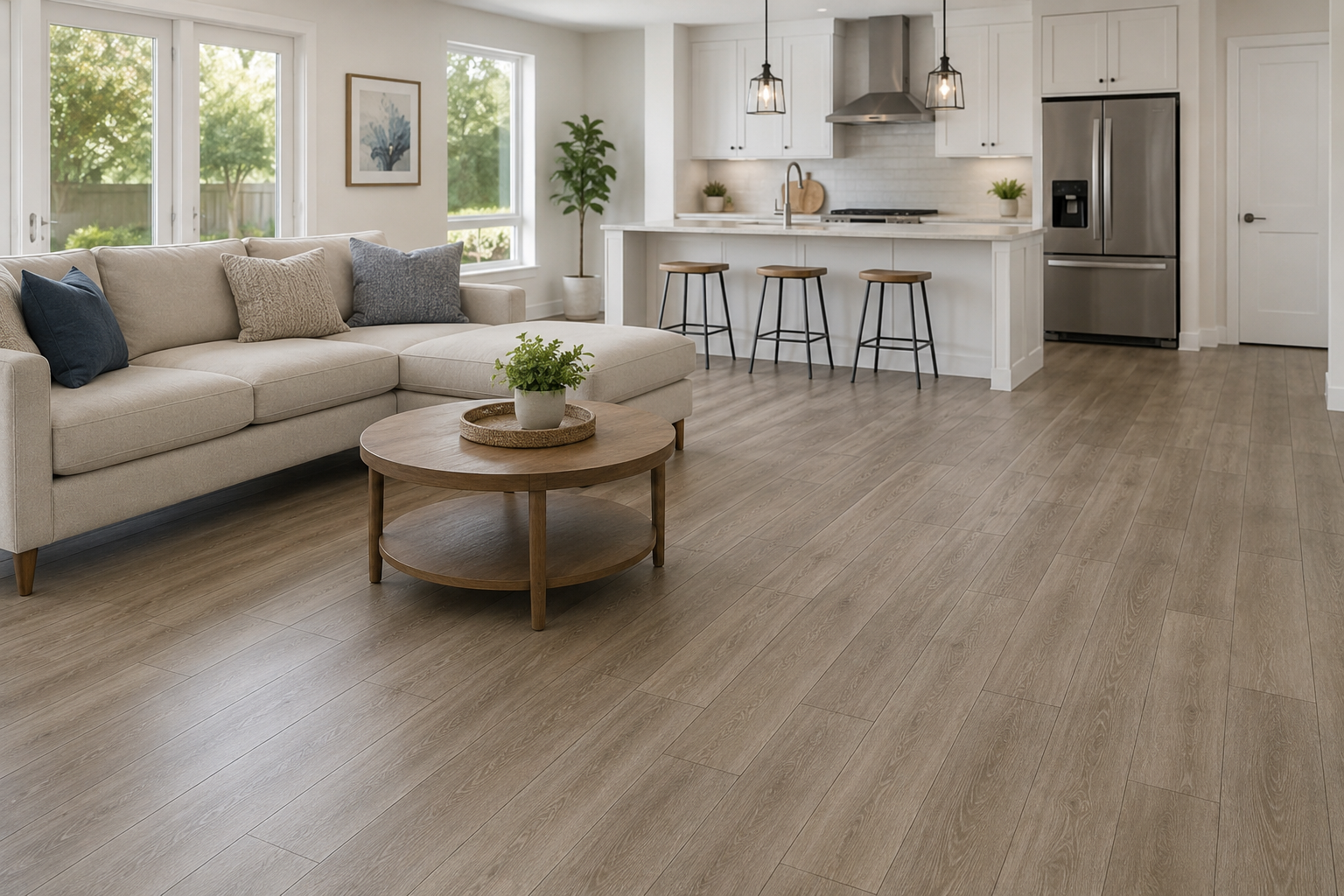
- Consistent flooring across main living spaces improves perceived flow.
- Mixing materials without transitions often lowers buyer confidence.
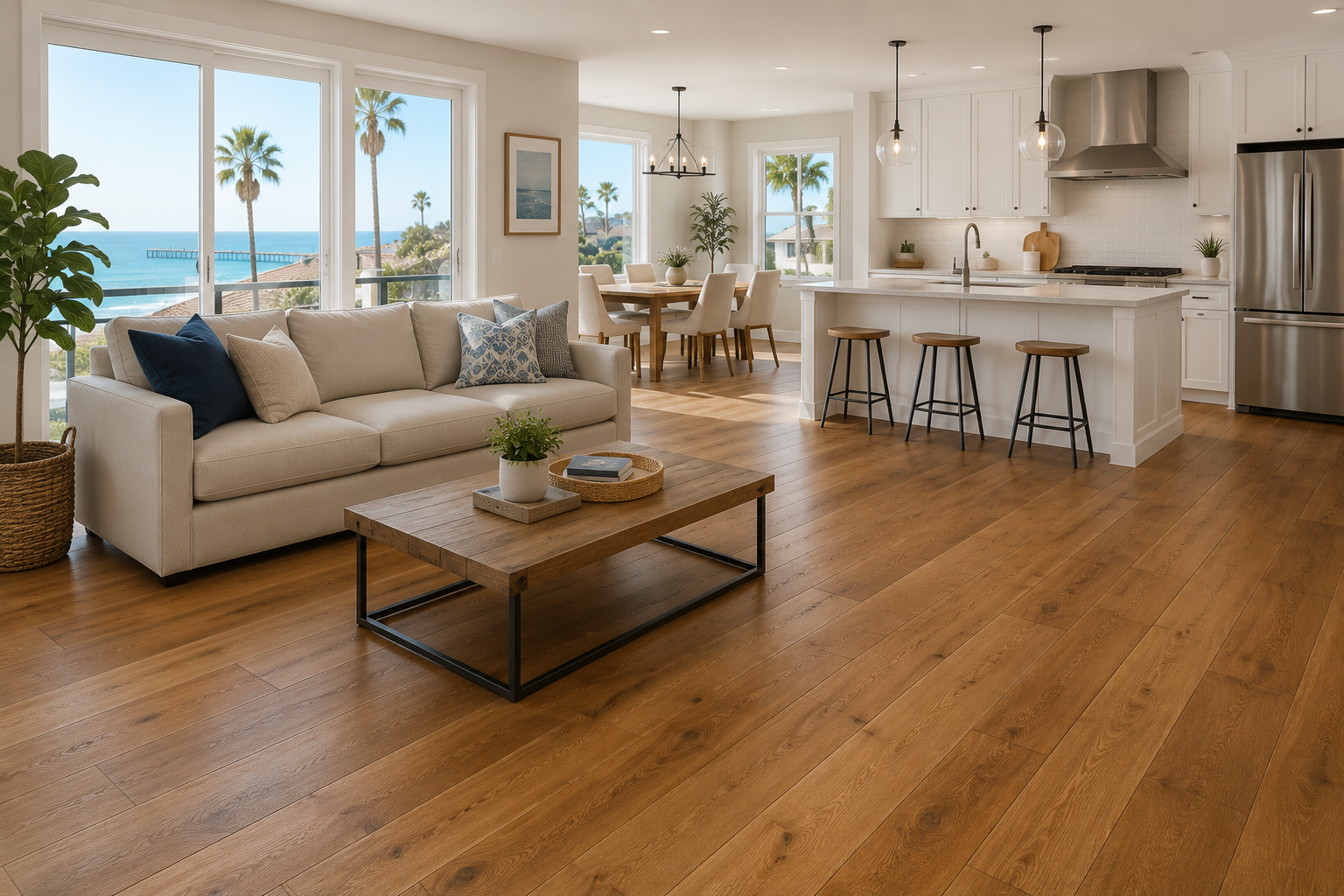
- Wide-plank and neutral tones currently show broader appeal.
- High-contrast or trendy finishes date more quickly.
- Bedrooms and secondary spaces have more flexibility than living areas.
Homes with cohesive flooring layouts generally show stronger buyer engagement even when materials are not premium-grade.
Climate and Lifestyle Constraints Specific to Vista Homes
Vista’s semi-arid coastal climate influences material performance over time.
- Temperature swings cause expansion and contraction in solid hardwood.
- Engineered hardwood offers better dimensional stability in coastal zones.
- Laminate performs well in dry conditions but fails quickly with moisture intrusion.
- Indoor-outdoor living increases dirt, grit, and foot traffic exposure.
- Entryway protection and proper acclimation reduce long-term damage risks.
Climate-appropriate installation practices matter as much as material choice when resale is a future goal.
Common Flooring Decisions That Reduce Resale Appeal
Certain mistakes consistently reduce perceived value regardless of material.
- Installing low-grade materials in visible areas.
- Using different flooring types in adjacent spaces.
- Ignoring subfloor preparation to reduce installation cost.
- Choosing finishes that conflict with wall colors or cabinetry.
- Delaying repair of visible damage before listing.
Avoiding these issues often has more resale impact than upgrading materials alone.
Conclusion
Hardwood and laminate flooring affect resale value differently depending on installation quality, consistency, and alignment with buyer expectations in Vista. Both materials can support resale when chosen with realistic cost, maintenance, and climate constraints in mind. A1 Factory Direct Flooring can help you to make an informed decision for your flooring needs.
Frequently Asked Questions
Does hardwood always increase resale value?
No. Hardwood only supports resale when condition, style, and installation quality match neighborhood expectations.
Is laminate flooring acceptable in mid-range Vista homes?
Yes. Modern laminate performs well when installed consistently and maintained properly.
Which flooring buyers prefer most in living areas?
Buyers usually prefer uniform surfaces that look durable and easy to maintain, regardless of material type.
How old is too old for flooring at resale?
Flooring showing visible wear or outdated style beyond 10–15 years can reduce perceived home value.
Does flooring choice affect appraisal value?
Appraisers focus on overall condition; flooring influences buyer behavior more than formal appraisal numbers.
Is engineered hardwood better for coastal climates?
Often yes. It handles moisture and temperature variation better than solid hardwood.
Should flooring be replaced before selling?
Replacement makes sense only when existing flooring shows visible damage or inconsistency.
Do buyers factor replacement cost into offers?
Yes. Buyers often deduct estimated replacement costs during negotiation.
Is matching flooring throughout the home important?
Consistency improves visual flow and reduces buyer hesitation, especially in open layouts.